About Helenium Clinic.
Helenium Clinic is led by Jola Kaczmarek, MNIMH, Dip Phyt, a Medical Herbalist.
“I was drawn to medical herbalism after experiencing its impact when I was faced with a persistent respiratory condition.
The nuanced synergies of plant compounds in herbal formulations, combined with a understanding of human physiology and pharmacology, can achieve real results for people.
This practice also has a deep ecological dimension, placing us back into reciprocal relationship with plants and asking us to see ourselves as part of the nature we depend on for our health.
I believe herbal medicine can make a real difference - one that supports not only personal healing, but a deeper sense of belonging: to nature, and to one another. ”
Every symptom tells a story. I take time to understand what's driving your health concerns
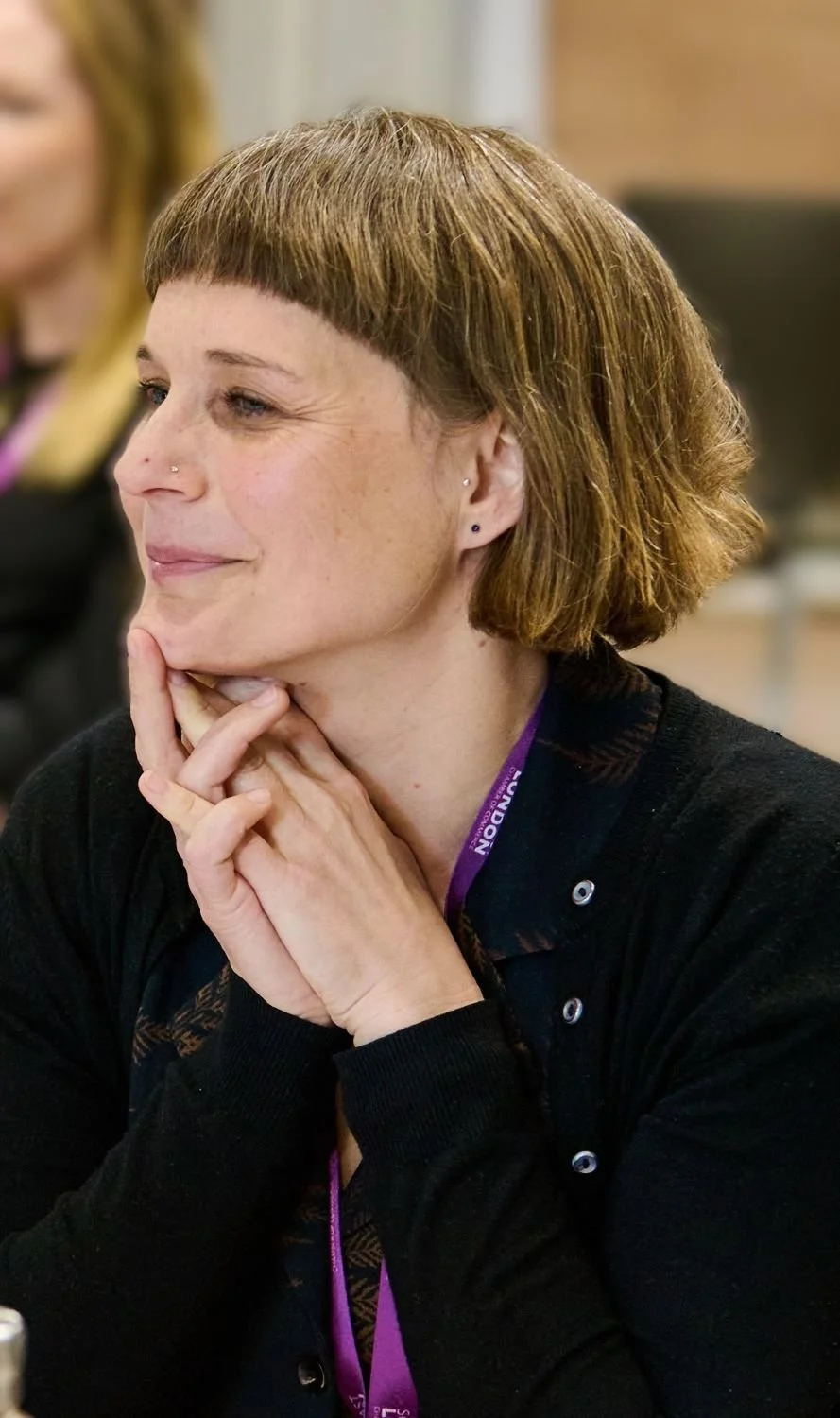
A medical herbalist is a clinically trained practitioner who prescribes plant medicines following a full health assessment. Training covers the same foundational sciences as other healthcare degrees - anatomy, physiology, pathology and pharmacology, alongside pharmacognosy, phytochemistry and materia medica. Medical herbalists prescribe individually formulated medicines rather than off-the-shelf supplements, and review every formulation for interactions with prescribed drugs.
What is a medical herbalist?
What training and qualifications does Jola have?
I am a degree-educated medical herbalist and completed 700 hours of supervised clinical training across UK herbal clinics and pre-hospital emergency care, practising alongside leading educators in both herbal and conventional medicine. I hold a BSc level Diploma in Herbal Medicine and am a member of the National Institute of Medical Herbalists, one of Europe's oldest professional herbal medicine bodies. I am also a member of the College of Medicine and Integrated Health and engage regularly with the College of Practitioners of Phytotherapy.
Why is the clinic called Helenium?
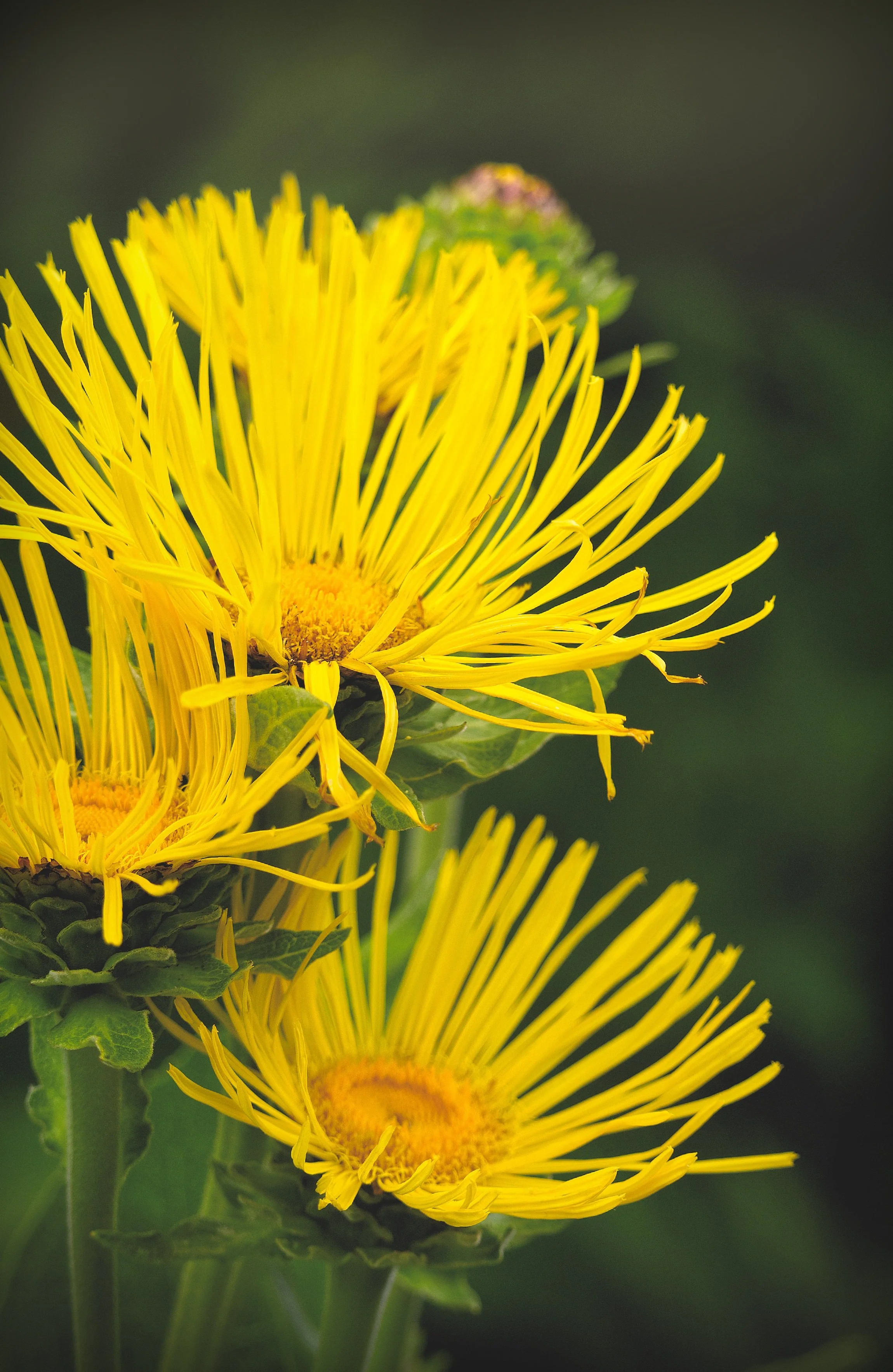
The clinic takes its name from Inula helenium, elecampane: a tall, yellow-flowered plant whose root has been used in European herbal practice for centuries, particularly in relation to the lungs and breath. Its root is also rich in inulin, a prebiotic fibre, which places it at the meeting point of two things: respiratory health and the gut.
Elecampane was said to protect against elf-shots: the invisible arrows that were thought to pierce a person and let illness in.
-
MNIMH stands for Member of the National Institute of Medical Herbalists, founded in 1864 and the UK's longest-established professional body for herbal practitioners.
Membership requires an accredited degree-level qualification, adherence to a professional code of ethics, current indemnity insurance and ongoing professional development. My registration can be verified on the NIMH member directory. -
Every formulation is made with organically grown plants, ethically sourced where they come from further afield. Herbal practice has an ecological dimension as well as a clinical one: it places us back into reciprocal relationship with plants and asks us to see ourselves as part of the nature we depend on for our health.